
2026-09-18 · David Harlan
How Humidity Levels in the Chattanooga Valley Lead to Attic Mold
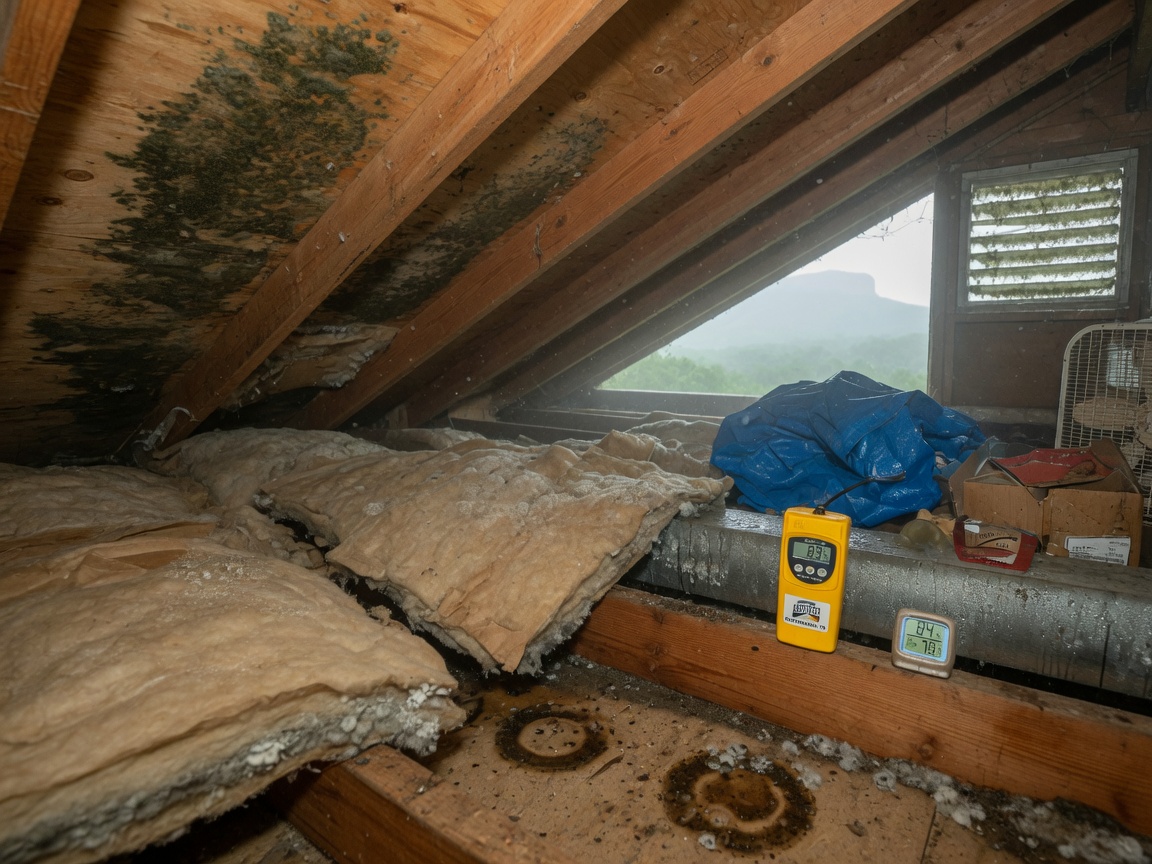
Chattanooga's humid subtropical climate keeps relative humidity levels between 65 and 80 percent from April through October, creating the moisture conditions that allow attic mold to form when ventilation cannot keep up in homes throughout Hamilton County.
The Role of Humidity in Chattanooga Valley Attics
Chattanooga sits in a valley surrounded by Lookout Mountain and ridges that trap moisture from the Tennessee River. This topography holds humid air in place longer than in surrounding higher elevations, so attic spaces reach dew points more often. Homes built before 1980 in neighborhoods such as Brainerd and Highland Park typically have smaller ridge vents and fewer soffit intakes, so moist air lingers. Once relative humidity inside the attic stays above 60 percent for several consecutive days, mold spores that enter through roof leaks or bathroom exhausts begin to colonize insulation and rafters. The four distinct seasons add freeze-thaw cycles in winter that can push more humid air upward from living spaces when furnaces run. These repeated moisture spikes make attic mold a recurring issue rather than a one-time event in the Chattanooga Valley.
Seasonal Patterns Affecting Attic Mold
Spring rains followed by warming temperatures push humidity spikes that last into early summer. In fall, cooling nights combined with still-warm attic air create condensation on roof sheathing, especially on north-facing slopes common in North Chattanooga. Summer thunderstorms deliver short but intense moisture loads that overwhelm undersized attic fans in many St. Elmo bungalows. Winter brings the lowest outdoor humidity, yet indoor heating dries the house and drives moisture upward through ceiling penetrations. Over a typical year these overlapping patterns keep attic relative humidity elevated for roughly six months, long enough for visible growth to appear on cellulose insulation and wood surfaces. Homeowners who notice musty odors after the first warm spell often trace the source to these cumulative seasonal effects.
Common Issues in Local Neighborhoods
Older housing stock in Highland Park and Lookout Valley features original knob-and-tube wiring and single-layer roof decks that limit airflow. Many Downtown Chattanooga row houses converted from commercial use have sealed soffits that block intake air. In Brainerd, post-war ranches often rely on one powered roof vent sized for smaller attics, so humidity builds in the far corners. These construction details interact directly with the valley's trapped moisture, producing mold colonies along the ridge line first. Residents near the Walnut Street Bridge and Coolidge Park report similar patterns because river proximity adds another layer of ambient humidity. The same conditions appear in homes within a short drive of Ruby Falls and the Tennessee Aquarium, showing how widespread the valley effect remains.
Practical Steps to Reduce Risk
Improving cross ventilation starts with adding or enlarging soffit and ridge vents to match current code ratios for the attic square footage. Sealing bathroom and kitchen exhaust ducts that terminate in the attic prevents direct moisture injection. Installing a dehumidifier sized for the attic volume and set to 50 percent relative humidity can interrupt growth during peak summer months. Checking insulation for existing damp spots after heavy rains helps catch problems before they spread. These steps address the humidity source rather than treating surface mold alone. For homes in North Shore or near the river, combining ventilation upgrades with regular inspections catches issues tied to the local microclimate before they require larger repairs.
Professional Assessment Options
When visible discoloration or persistent odors appear, a targeted mold inspection and testing identifies species and moisture sources specific to the attic. In cases where growth has spread to structural members, black mold removal protocols address both the mold and the underlying humidity driver. Homeowners who want to understand how spring rains accelerate the same process can read the related post on Mold Growth After Spring Rains in Chattanooga Neighborhoods. These assessments focus on measurable humidity data and airflow calculations rather than general advice, matching the realities of Chattanooga Valley construction and climate.