
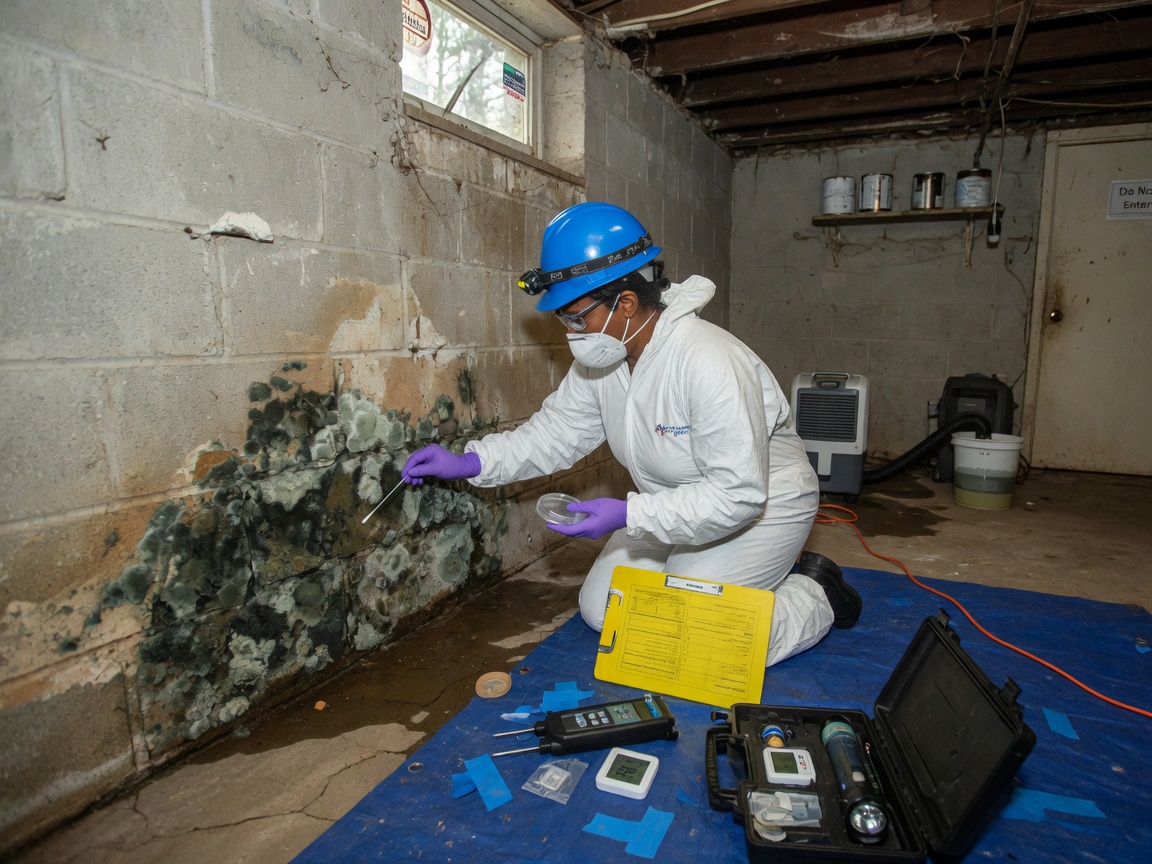
Chattanooga's humid subtropical climate brings heavy spring rains and high summer humidity that drive moisture into crawlspaces and attics of pre-1970 homes common in Brainerd and Highland Park. These properties often feature pier-and-beam foundations and single-pane windows that allow condensation on ductwork during temperature swings between winter and the warmer months. Inspection protocols focus on mapping moisture gradients with pin and pinless meters rather than relying on visual cues alone, because hidden growth frequently occurs behind plaster walls or under carpet padding installed over concrete slabs.
In neighborhoods like St. Elmo and Lookout Valley, proximity to the Tennessee River and Lookout Mountain increases groundwater seepage risks after prolonged wet periods. Testing here includes strategic air sampling at multiple elevations within the structure plus surface tape lifts from HVAC registers, because spores travel easily through the duct systems of older forced-air furnaces. Reports document spore counts compared against outdoor baselines taken the same day, giving homeowners in Hamilton County clear data before any remediation decisions.
Downtown Chattanooga and North Chattanooga condominiums present different challenges with shared walls and limited access points. Moisture often migrates from adjacent units or from roof leaks around the Walnut Street Bridge corridor where wind-driven rain is common. Inspection includes thermal imaging of party walls and targeted boroscope checks through small openings in finished ceilings to locate active growth without unnecessary demolition.
Technician insight
In Chattanooga the thing that catches most people out with Mold Inspection and Testing is how quickly spores move through the ductwork of 1950s–1970s homes in Brainerd and Highland Park once humidity spikes after spring rains. Homeowners often miss growth on the back side of insulation because they only check visible surfaces, but the real issue usually starts with poor grading around pier foundations that stay damp for weeks.
Hidden Growth Behind HVAC Return in North Chattanooga
A North Chattanooga homeowner noticed musty smells near the living room vent after heavy April rains. Inspection found elevated moisture in the return plenum and elevated Penicillium spores in air samples. Targeted surface testing confirmed growth on the back of the insulation; the report guided precise removal without opening finished walls.
Mold Inspection and Testing Services We Offer
✓Air Sampling and Analysis
Indoor and outdoor spore trap sampling with lab comparison to identify elevated mold types common after Chattanooga's seasonal rains.
✓Surface and Bulk Testing
Tape lift and material sampling from drywall, wood, and insulation in crawlspaces and attics of Hamilton County homes.
✓Moisture Mapping and Infrared Scans
Detailed moisture meter readings and thermal imaging to locate hidden water intrusion behind walls in older Brainerd and St. Elmo properties.
✓HVAC System Inspection
Ductwork and coil assessment for mold growth driven by high humidity condensing inside systems during Chattanooga summers.
✓Post-Remediation Verification
Clearance air and surface testing after removal work to confirm levels have returned to normal outdoor baselines.
Mold Inspection and Testing Cost in Chattanooga, TN
| Service | Typical Range | What Affects It |
|---|---|---|
| Basic Air Sampling Package | $250–$450 | Two indoor samples plus outdoor control; price rises with additional rooms or HVAC testing. |
| Full Moisture Mapping | $300–$550 | Includes infrared scan and meter readings throughout main levels and crawlspace. |
| Post-Remediation Clearance | $200–$350 | Air sampling only after remediation; required before final clearance in many insurance claims. |
Ranges are typical for Chattanooga, TN and confirmed with an exact written quote before any work starts.
How it works
- 1
Site Walk And History Review
Technician examines the property layout, past water events, and ventilation patterns specific to the neighborhood's housing age.
- 2
Targeted Sampling
Air, surface, and moisture readings collected from high-risk zones such as crawlspaces, attics, and HVAC returns.
- 3
Laboratory Analysis
Samples sent for spore identification and count comparison against same-day outdoor controls from the Chattanooga area.
- 4
Written Findings Report
Results delivered with location photos, moisture data, and recommendations tied to local building conditions.
Pricing
Inspection cost depends on square footage, number of samples, and access difficulty in crawlspaces or multi-level homes.